eGFR 2009 CKD-EPI creatinine equation (without race) - Evidencio
eGFR 2009 CKD-EPI creatinine equation (without race)

The CKD-EPI eGFRcr calculator is intended to be used by professional users who are capable of operating the device and interpreting its results. It can be used to estimate the Glomerular Filtration Rate in patients to assess kidney functioning.

The CKD-EPI (Chronic Kidney Disease Epidemiology Collaboration) equations were developed in an effort to create a more precise formula to estimate glomerular filtrate rate (GFR) from serum creatinine, age, sex, and originally race. The CKD-EPI released their original equations in 2009, which included race as a variable. In 2021, they used the same data to derive a new equation that does not include race as an explanatory variable.

This version regards the 2009 equation, excluding race as an explanatory variable.

Research authors: Lesley A. Inker, M.D., Nwamaka D. Eneanya, M.D., M.P.H., Josef Coresh, M.D., Ph.D., Hocine Tighiouart, M.S., Dan Wang, M.S., Yingying Sang, M.S., Deidra C. Crews, M.D., Alessandro Doria, M.D., Ph.D., M.P.H., Michelle M. Estrella, M.D., M.H.S., Marc Froissart, M.D., Ph.D., Morgan E. Grams, M.D., M.H.S., Ph.D., Tom Greene, Ph.D., Anders Grubb, M.D., Ph.D., Vilmundur Gudnason, M.D., Ph.D., Orlando M. Gutiérrez, M.D., Roberto Kalil, M.D., Amy B. Karger, M.D., Ph.D., Michael Mauer, M.D., Gerjan Navis, M.D., Ph.D., Robert G. Nelson, M.D., Ph.D., Emilio D. Poggio, M.D., Roger Rodby, M.D., Peter Rossing, M.D., D.M.Sc., Andrew D. Rule, M.D., Elizabeth Selvin, Ph.D., M.P.H., Jesse C. Seegmiller, Ph.D., Michael G. Shlipak, M.D., M.P.H., Vicente E. Torres, M.D., Ph.D., Wei Yang, Ph.D., Shoshana H. Ballew, Ph.D., Sara J. Couture, M.P.H., Neil R. Powe, M.D., M.P.H., M.B.A., Andrew S. Levey, M.D.
Version: 2.0
  • Public
  • Nephrology
  • {{ modelType }}
V-2.0-9984.26.02.26
(01)08720938015250(8012)v2.0(4326)260226(240)9984
Download the User manual and consult the Intended purpose.
  • Algorithm
  • Details
  • Intended purpose
  • Electronic label
  • Release Notes
  • User manual
  • {{ toolbarErrorMessage }}

Units

{{ section.title }}

{{ section.description }}

Calculate the result

Set more parameters to perform the calculation

Estimated GFR: mL/min/1.73m^2

{{ resultSubheader }}
{{ $t('download_result_availability') }}
{{ chart.title }}
Result interval {{ additionalResult.min }} to {{ additionalResult.max }}

Conditional information

Your text input(s) have been changed. Please update your result. Update

The eGFR is an estimation of the Glomerular Filtration Rate, estimated through serum Creatinine concentrations.  Generally, normal GFR values lie between 90 and 120 mL/min/1.73m^2. A GFR between 60 and 90 may point to early stage kidney disease A GFR between 15 and 60 is indicative of kidney disease a GFR below 15 is a sign of kidney failure.

One of the disadvantages of the CKD-EPI eGFRcr calculator is that it only accounts for Age and Sex (and Race, in the 2009 equations) without taking into account body shape. As Creatinine is produced by muscle tissue, production levels differ between different patients, as people of the same age and gender may have drastically different amounts of muscle tissue, which influences eGFR calculation.

{{ file.classification }}
PRO
Note
Notes are only visible in the result download and will not be saved by Evidencio

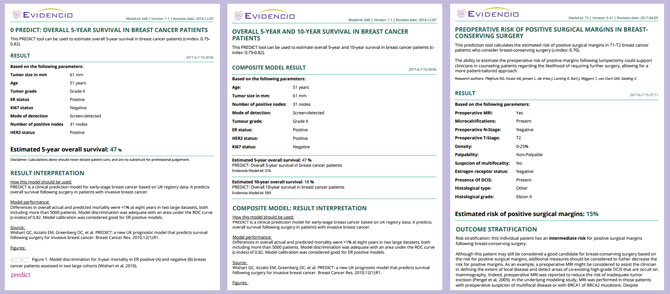
Calculations alone should never dictate patient care, and are no substitute for professional judgement. See our full disclaimer.

Underlying algorithms Part of
logo

Please sign in to enable Evidencio print features

In order to use the Evidencio print features, you need to be logged in.
If you don't have an Evidencio Community Account you can create your free personal account at:

https://www.evidencio.com/registration

Printed results - Examples {{ new Date().toLocaleString() }}


Evidencio Community Account Benefits


With an Evidencio Community account you can:

  • Create and publish your own prediction algorithms.
  • Share your prediction algorithms with your colleagues, research group, organization or the world.
  • Review and provide feedback on algorithms that have been shared with you.
  • Validate your algorithms and validate algorithms from other users.
  • Find algorithms based on Title, Keyword, Author, Institute, or MeSH classification.
  • Use and save prediction algorithms and their data.
  • Use patient specific protocols and guidelines based on sequential algorithms and decision trees.
  • Stay up-to-date with new algorithms in your field as they are published.
  • Create your own lists of favorite algorithms and topics.

A personal Evidencio account is free, with no strings attached!
Join us and help create clarity, transparency, and efficiency in the creation, validation, and use of medical prediction algorithms.


Disclaimer: Calculations alone should never dictate patient care, and are no substitute for professional judgement.
Evidencio v3.40 © 2015 - 2026 Evidencio. All Rights Reserved